Zum Hauptinhalt springen Zur Suche springen Zur Hauptnavigation springen
schedule Versand innerhalb von 24 Stunden
package_2 Alle Teile sind MDR-konform
headset_mic Bequemer Kauf auf Rechnung
schedule Kundenservice: +31 88 0531000
check
Sparen Sie Geld im Vergleich zu Originalteilen
check
Vollständig MDR-konforme Ersatzteile
check
Kompatibel mit Ihrer OEM-Ausrüstung

Meistern Sie die Kunst des Patiententransfers: Grundlegende Techniken und Patientenkontrollen, die Sie kennen müssen

Unsere Patientenliftergurte werden für den Transfer von Klienten verwendet, die ihr eigenes Gewicht nicht sicher tragen können. Die richtige Technik ist von entscheidender Bedeutung, da ein erheblicher Teil der Verletzungen von medizinischem Personal bei Patiententransporten auftritt. Bis zu 60 % dieser Verletzungen sind auf Überanstrengung zurückzuführen. Dies unterstreicht die Bedeutung einer angemessenen Ausbildung und Ausrüstung.

Schauen Sie sich einige wichtige Techniken an, um die Sicherheit von Patienten und medizinischem Personal zu gewährleisten

1. Evaluate patient mobility and medical condition 

Before using a patient lift first check if the patient can assist with a transfer. It is important to assess the patient's ability to participate. In the case of partial ability and upper extremity strength in both arms, have the patient lift while the caregiver gently repositions their knees. Addressing this question beforehand can prevent the caregiver from being put in a potentially hazardous situation and minimize the risk of injury. In addition evaluate the patient weight and overall condition and verify the guidelines of the patient lift to ensure the lift is appropriate. 

Determine how much support from other care givers is needed to safely lift the patient. For certain transfers, a full body or sit-to-stand lift can be incredibly helpful. These lifts are designed to support the patient's full weight, reducing the strain on the caregiver's neck, back, and shoulders. Always make sure you have correct lift and sling for patient’s condition.

1. Evaluate patient mobility and medical condition 

Before using a patient lift first check if the patient can assist with a transfer. It is important to assess the patient's ability to participate. In the case of partial ability and upper extremity strength in both arms, have the patient lift while the caregiver gently repositions their knees. Addressing this question beforehand can prevent the caregiver from being put in a potentially hazardous situation and minimize the risk of injury. In addition evaluate the patient weight and overall condition and verify the guidelines of the patient lift to ensure the lift is appropriate. 

Determine how much support from other care givers is needed to safely lift the patient. For certain transfers, a full body or sit-to-stand lift can be incredibly helpful. These lifts are designed to support the patient's full weight, reducing the strain on the caregiver's neck, back, and shoulders. Always make sure you have correct lift and sling for patient’s condition.

2. Select patient's sling size 

Evaluate the patient's size, weight, and hip measurements before selecting a sling. Following the manufacturer's recommended patient measurements will ensure that you choose the appropriate sling size. It is critical to get the sizing right; using a sling that is too large can result in the patient slipping out, while a sling that is too small can cause the patient to fall. 

Avoid these potential hazards by carefully assessing the patient's measurements and choosing the right sling.

3. Communicate to the patient and prepare environment

Clear and effective communication is key in safe patient transfers. Before conducting the transfer its is vital to communicate with the patient. Explain the transfer process and let them know what to expect. This will minimize the change of confusion during the transfer.

Operating a patient lift usually requires the assistance of two or more caregivers. To ensure a safe lift, properly position the lift base legs close to the patient's device and clear a path for the lift to move freely. Having a well-positioned lift and a clear path will make the lift operation smoother and minimize the risk of any incidents.

1. Evaluate patient mobility and medical condition 

Before using a patient lift first check if the patient can assist with a transfer. It is important to assess the patient's ability to participate. In the case of partial ability and upper extremity strength in both arms, have the patient lift while the caregiver gently repositions their knees. Addressing this question beforehand can prevent the caregiver from being put in a potentially hazardous situation and minimize the risk of injury. In addition evaluate the patient weight and overall condition and verify the guidelines of the patient lift to ensure the lift is appropriate. 

Determine how much support from other care givers is needed to safely lift the patient. For certain transfers, a full body or sit-to-stand lift can be incredibly helpful. These lifts are designed to support the patient's full weight, reducing the strain on the caregiver's neck, back, and shoulders. Always make sure you have correct lift and sling for patient’s condition.

4. Place patient in sling

1.Place patient in sling. Position center of sling under patient’s spine. Place leg straps flat under patient; do not let material fold. Make sure sling opening is not large enough to let patient slip out or too small to let patient fall out. 

 2 Lower sling bar down to patient. Do not let sling bar hit patient.

 3 Attach sling straps to sling bar as directed by manufacturer. Use matching loops from each side to ensure sling is balanced. Choose loops that provide best angle and position for patient. Ensure all clips or loops are secure and will stay attached as patient is lifted. Ensure straps are not twisted. Ensure patient's head and/or back is supported, if needed.

5. Preform a safety check 

Before lifting the patient, perform safety check: Examine all hooks and fasteners to ensure they will not unhook during use. Double-check position and stability of straps and other equipment before lifting patient. Ensure clips, latches and bars are securely fastened and structurally sound.

1. Evaluate patient mobility and medical condition 

Before using a patient lift first check if the patient can assist with a transfer. It is important to assess the patient's ability to participate. In the case of partial ability and upper extremity strength in both arms, have the patient lift while the caregiver gently repositions their knees. Addressing this question beforehand can prevent the caregiver from being put in a potentially hazardous situation and minimize the risk of injury. In addition evaluate the patient weight and overall condition and verify the guidelines of the patient lift to ensure the lift is appropriate. 

Determine how much support from other care givers is needed to safely lift the patient. For certain transfers, a full body or sit-to-stand lift can be incredibly helpful. These lifts are designed to support the patient's full weight, reducing the strain on the caregiver's neck, back, and shoulders. Always make sure you have correct lift and sling for patient’s condition.

6. Lift the patient 

Ensure patient security by lifting them 2 inches off the surface. Confirm the following:

  • Sling straps are properly secured on the sling bar and won't slip.
  • Weight is distributed evenly among the straps.
  • Patient is secure and won't slide or tip. Check for comfort:
  • Sling does not cause any skin irritation or discomfort.
  • Verify patient comfort by asking and observing non-verbal cues.
  •  Gradually lift the patient as high as needed during transfer. 
  •  Continuously monitor patient comfort and ensure sling does not cause any harm.

7. Lower the patient 

  • Assist the patient by applying gentle pressure as you move the lift towards the receiving surface.
  • Gradually lower the patient onto the surface, positioning them correctly before releasing their weight.
  • Release their weight carefully, ensuring that the sling bar does not hit them.
  • Disconnect the sling from the lift according to the manufacturer's instructions.
  • Safely remove the sling from the patient, taking care not to cause any skin irritation.
  • Support seated patients to prevent them from falling forward during sling removal.


Schauen Sie sich einige unserer meistverkauften Tragetücher an
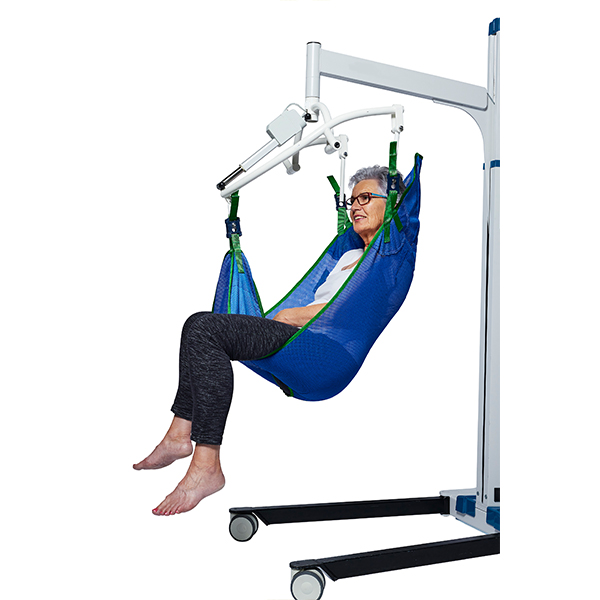


Tailored Perfection | Standard Mesh Sling | Clips | Size XL
Art nr: TP-TB-SD-00770
260,15 € Inkl. MwSt
215,00 € Exkl. MwSt
Tailored Perfection | Corset Sling | Loops | Size M
Art nr: TP-TB-CT-00640
289,19 € Inkl. MwSt
239,00 € Exkl. MwSt
Tailored Perfection | All Day Sling | Clips | Size XL
Art nr: TP-TB-AD-00570
289,19 € Inkl. MwSt
239,00 € Exkl. MwSt